Ozil AI Video Trend Explained: Why the 2016 Goal Went Viral
 Ozilai Team
What the Ozil AI video trend is: the 2016 Arsenal goal behind it, the four beats every recreation hits, and why the format spread across every feed.
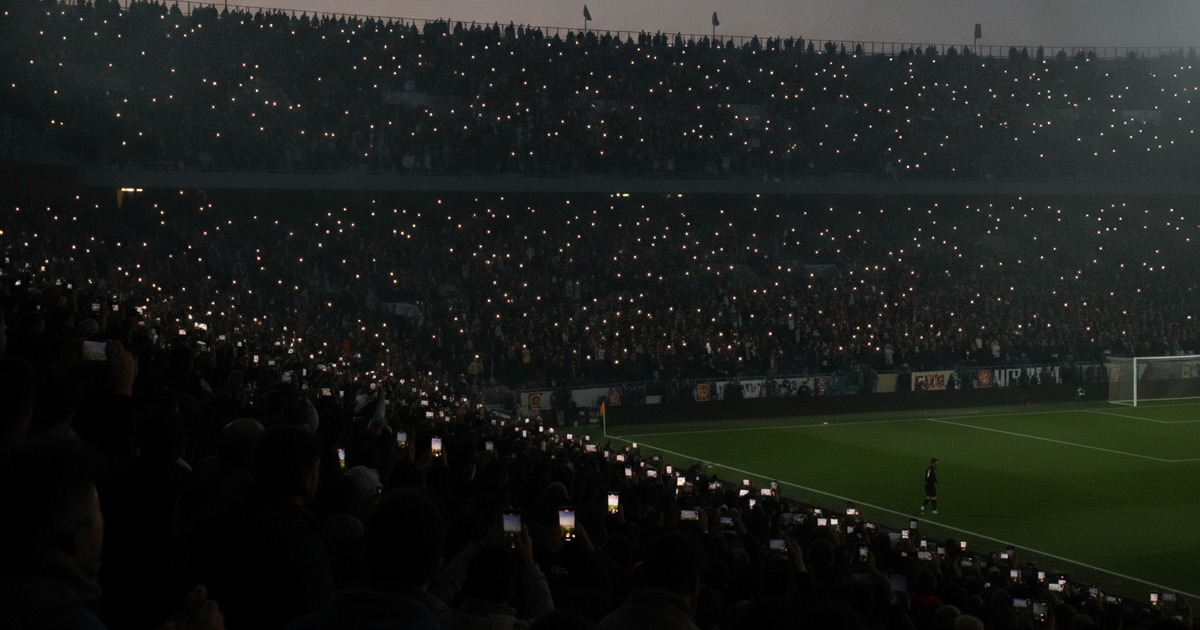
The Ozil AI video trend is a wave of AI-generated clips that drop ordinary people — and deliberately unexpected characters — into Mesut Özil's goal for Arsenal against Ludogorets on 2 November 2016. The source moment is real: a long ball from Mohamed Elneny, Özil chipping goalkeeper Milan Borjan, two defenders sliding in, and a pass into the empty net. Years later, image-to-video models like ByteDance's Seedance 2.0 became good enough to reproduce that five-second sequence from a single photo, which is why the format escaped football accounts and turned into a general-purpose template that anyone can enter.
Genera il tuo qui
Scegli una foto chiara e ben illuminata della persona a cui appartiene il gol.
Carica una foto per continuare.
Generando, confermi di avere il permesso di usare questa foto.
Il tuo clip appare qui
Un rendering con le impostazioni predefinite costa 30 crediti.
The Goal Behind the Trend
On 2 November 2016, in a UEFA Champions League group game, Arsenal were playing Ludogorets in Sofia. Mesut Özil's goal that night is the entire source material for the trend, and it is worth walking through exactly what happens, because every recreation is judged against it.
Mohamed Elneny lifts a long pass over the Ludogorets defence into the space behind it. Özil, running from deep, gets to the ball first. Milan Borjan, the goalkeeper, has charged out to the edge of his area to close the angle, so Özil does not shoot into him — he chips the ball over him. Two defenders scramble back and slide in to block the finish, and Özil calmly takes the ball past them and passes it into the empty net.
Two things make that goal unusually well suited to becoming a format. The first is that the whole thing is legible in one glance: the ball goes over the top, over the goalkeeper, past two defenders, and in. Nobody needs a commentary track. The second is that the camera never has to find the action — the broadcast frame is already wide enough to hold the pass, the goalkeeper, the defenders, and the finish at the same time.
Why a 2016 goal resurfaced years later
The goal itself is not the trend; the model is. Image-to-video generation reached the point where a face from a single still photo could survive a fast, physically complex five-second shot without dissolving into a stranger. Once that threshold was crossed, a clip that used to require a VFX artist and a compositor became something a person could produce from a phone photo and a paragraph of text.
The format also needed a subject with a low skill floor. A generic "make an AI football video" prompt is open-ended — you have to invent the action, and the result usually looks like a person jogging in a stadium. The Özil goal is the opposite: the action is fixed, the beats are known, and all you are really choosing is who is in it. That is a template, and templates spread.
The Four Beats Every Recreation Has to Hit
Any Ozil AI video stands or falls on whether these four things are visible in order. Get three of them and the clip reads as generic football; get all four and the audience recognises the original instantly.
- The long ball over the top. Someone plays the pass in behind the defence, and the subject runs onto it from deeper than the last defender.
- The chip over the goalkeeper. The goalkeeper is out of his goal and committed, and the ball is lifted over him rather than driven past him. This is the signature beat — the one that makes the goal memorable and the clip recognisable.
- The two sliding defenders. The ball is taken past defenders who have gone to ground trying to block it. This beat is what makes the sequence feel like a real scramble rather than a training drill.
- The pass into the empty net. With the keeper still recovering, the ball is rolled into the goal. The finish is unhurried, which is the point — it looks composed rather than spectacular.
If you are writing a prompt for one of these, the prompt guide breaks each beat down into phrasing that the model responds to.
Why It Works as a Format, Not Just a Joke
Most viral video formats are hard to enter because they demand either equipment or timing. This one demands a photo. That single fact explains a lot of the trend's reach, but it is not the whole story.
- The action is short and recognisable. Five seconds, one location, one continuous camera move. There is no setup to explain and no ending to negotiate.
- The camera is effectively fixed. Broadcast footage has a stable frame, which means the subject is the only variable in the shot. The model does not have to invent a scene, only a person inside a scene it already understands.
- The punchline is instant and visual. The joke lands the moment you see who is running onto the ball. No caption required, which matters on a feed where most people watch with sound off.
- The swap is infinitely variable. A comedy impression of Özil, a colleague, a grandparent, a mascot, a robot — the further the face is from a Champions League forward, the funnier the clip reads.
- Every entry reinforces the template. Because the beats never change, each new version teaches the next viewer what to look for. That is a self-reinforcing loop, and it is why trends of this shape run much longer than one-off novelty edits.
How the Trend Spreads Across Platforms
The same vertical clip works everywhere, but each surface rewards a slightly different presentation. None of these platforms is where the trend started or finished — they are stages in a relay, and the clip moves between them.
| Platform | Format | Why it fits | | ----------------------- | ---------------------------------------------- | -------------------------------------------------------------------------------------------------------------------------------------------------------------------------------------------------------------------- | | TikTok | Vertical 9:16, short clip, sound-led | The feed is built for a single instant payoff, and the chip gives viewers a moment to laugh at before they can scroll past. Duets and stitches let the next person answer with their own face. | | Instagram Reels | Vertical 9:16, clip plus on-screen caption | The trend is legible in the caption, so a one-line label like "he never played football" carries the joke even for viewers who do not know the original goal. Saves and shares push it into friends' feeds. | | YouTube Shorts | Vertical 9:16, short clip, often a compilation | Shorts reward rewatches and long watch sessions, so creators stack several versions back to back — five faces, one goal — and the template makes the repetition coherent rather than random. | | Stories and group chats | Vertical or square, sent person to person | The lowest-stakes distribution, and often the first place a clip is tested. A friend's face in Özil's boots is a private joke before it is a public post, which is exactly how the format recruits new participants. |
The pattern across all four is the same: the clip is the entry ticket, and the comment section is where the next version gets requested. That is the difference between a trend and a viral video — a trend needs people to want to make their own.
What Makes It Different From Generic AI Football Edits
Search for AI football content and you will find a lot of clips that share the surface of this trend and none of its structure. The differences are worth understanding, because they explain why one type looks convincing and the other rarely does.
A generic AI football edit starts from an open prompt. "A striker scores an incredible goal in a packed stadium" gives the model almost no constraints, so it improvises: the pitch geometry wobbles, the crowd smears, and the ball behaves like it is being controlled by nobody. The result is impressive for a second and then unconvincing.
The Özil format starts from a fixed piece of choreography. The pass, the chip, the slide, and the finish are specified in order. The model is not inventing a football moment; it is executing a known one. That constraint is what keeps the physics coherent — a chip has a readable arc, and an empty net is an unambiguous target.
The audience already knows the punchline. In a generic edit, novelty is the whole appeal, and the clip has to be more spectacular than the last one to land. In this format, the appeal is recognition plus substitution: viewers know the goal, and the variable is who is in it. That is a much easier thing to make, and a much easier thing to keep making.
Fidelity is checkable. The original footage exists. Anyone can compare your clip against it and see whether the goalkeeper came out, whether the ball went over him, and whether there were defenders sliding. A format with a reference has a quality bar, and that bar is what keeps it from collapsing into mush.
It borrows the broadcast language of real football. Users describe long lenses, night floodlights, and a camera tracking the run, which pushes the output toward the visual grammar of a real highlight package. Generic edits rarely specify a camera, so they drift toward a video-game look.
Where the Format Goes From Here
The Özil goal is one template among many, and the same machinery — a recognisable five seconds, a fixed camera, one face swapped in — applies to plenty of other famous moments. That is the broad lesson: in image-to-video, the constraint is the creative act. The formats that will keep working are the ones where the model has least to invent and the audience has most to recognise. If you want to see how the wider wave is developing, viral AI football trends tracks the shape of it, and how Seedance 2.0 handles photo-to-video explains the model doing the work.
To try it yourself, pick a photo, keep it simple, and generate one clip on the free credits you get at sign-up. A single standard 720p, 12-second generation costs 10 credits; plans and one-time credit packs are listed on the pricing page. The step-by-step walkthrough covers the photo, the prompt, and the posting.
FAQ
What is the Ozil AI video trend in one sentence?
It is a trend where AI video tools place someone else's face into Mesut Özil's 2016 goal for Arsenal against Ludogorets — the chip over goalkeeper Milan Borjan and the finish into an empty net — turning a real Champions League highlight into a template anyone can be cast in.
Did Özil actually score that goal?
Yes. The goal is real, scored for Arsenal against Ludogorets in the UEFA Champions League on 2 November 2016, from a Mohamed Elneny long pass. The trend does not alter the original footage; it recreates it with different people in it.
Is this the same as other AI football trends?
Not quite. Most AI football edits start from an open prompt and are judged on how spectacular the invented action looks. This format starts from a specific real goal with four fixed beats, so it is judged on recognition and on who is in the shot. Related trends share the machinery but not the template.
Do you need to understand football to make one?
No. You need to name the four beats in the prompt — the long ball, the chip over the goalkeeper, the sliding defenders, and the finish into the empty net — and pick a clear photo. The sequence does the rest, and the audience supplies the context.
Why do the best versions look like real broadcast footage?
Because they keep the camera boring and the action specific. A wide broadcast frame that holds the goalkeeper, the defenders, and the ball at the same time is what makes the clip read as a highlight rather than a rendered animation. When a version looks fake, the camera has usually drifted too close or the prompt has asked for too many things at once.
Is the trend still worth making?
The template is far from exhausted, because the number of faces that can be cast into it is unlimited and the reference goal is permanent. The versions that stand out now are the ones with a genuinely unexpected subject or an unusually clean recreation — not the ones that simply use the format.